Knee pain: 3 signs you need to see an orthopedic surgeon
Almost everyone has had knee pain at some point. These three signs mean it’s no longer something rest will fix, and that a consultation makes sense.

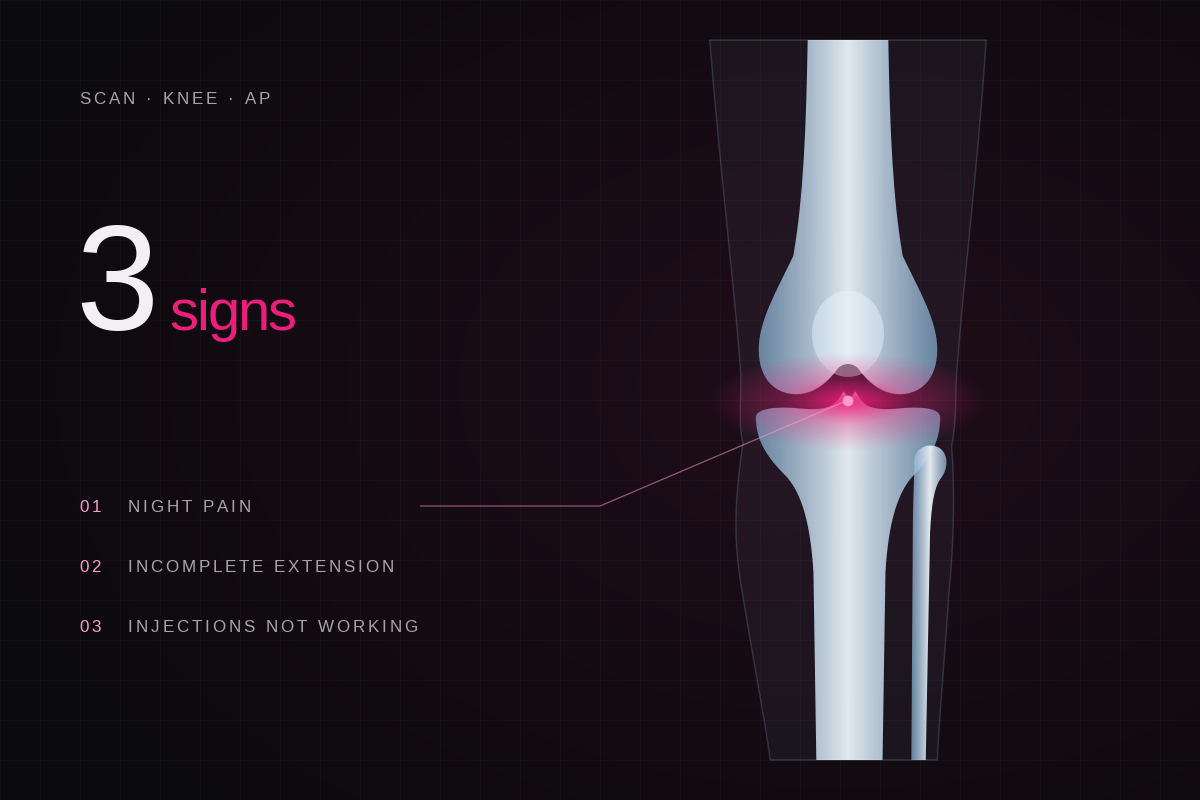
Knee pain is one of the most common reasons people see an orthopedic surgeon. It often improves with rest, ice or a change of shoes. But three signs mean the joint needs a checkup with an orthopedic surgeon: pain that wakes you at night, a leg that no longer straightens all the way and injections that have stopped working. Here we explain what each one means, what other signs to watch for and what happens at a consultation.
You should see an orthopedic surgeon for knee pain when the pain wakes you at night, when your knee no longer straightens all the way, when treatments that used to help stop working or when the pain keeps you from walking, climbing stairs or sleeping. If you had a hard blow and can’t put weight on your leg, go to the emergency room.
1. Pain that wakes you at night
Pain that shows up after a lot of walking or at the end of the day is common when a knee starts to wear out. Pain that shows up at rest, lying down and without any effort, is different: it usually means the inflammation in the joint no longer depends only on activity.
The American Academy of Orthopaedic Surgeons (AAOS) lists moderate or severe pain at rest, day or night, among the situations considered when assessing whether knee wear is advanced. It isn’t a diagnosis on its own, but it is a reason to have your knee checked.
What you can do: write down how many nights a week the pain wakes you and whether it improves when you change position. That record helps a lot at your visit.
2. A leg that no longer straightens all the way
A healthy knee straightens until the leg is fully straight. When the joint is very inflamed or worn, it can lose those last few degrees and stay slightly bent even when you try to straighten it. This is called a flexion contracture.
Walking with your knee slightly bent tires your thigh muscles more and changes how the load falls on your hip and back. Many people notice it as a limp or as tiredness when walking distances they used to cover without trouble.
A simple check at home: sit on the bed with your legs stretched out and see whether the back of your knee touches the mattress. Compare it with the other leg. If you notice a difference, mention it at your consultation. This check doesn’t replace a medical exam, but it gives you something concrete to share.
3. Injections that have stopped working
Steroid or hyaluronic acid injections (viscosupplementation) are a useful way to control pain at many stages of wear. When each injection lasts less than the one before, or no longer brings relief, it’s a sign that the joint has changed.
That doesn’t mean you need surgery. It means your treatment plan should be updated with an exam and recent studies. Steroid injections also have a reasonable number of applications per year, which your doctor determines.
Do you recognize one or more of these signs?The consultation includes an exam, a review of your studies and a clear plan.
Book a consultationOther signs worth checking
- Swelling that comes back even if you rest or take anti-inflammatories.
- Your knee gives way when you go down stairs or turn.
- Locking: a feeling that something catches and won’t let you bend or straighten your knee. It can point to a meniscus injury.
- Worsening deformity, such as legs that bow outward (O-shaped) or inward (X-shaped).
- Pain that limits your day: climbing stairs, getting up from a chair or walking more than a few blocks.
- Cracking with pain. Cracking without pain usually isn’t a concern; with pain or swelling, it’s worth having it checked.
When to go to the emergency room instead of waiting
- You had a blow, a fall or a twist and can’t put weight on your leg.
- Your knee looks deformed or the bone seems out of place.
- Your knee is hot, red and swollen and you have a fever.
- You have severe calf pain with swelling, especially after surgery or a long trip.
What happens at a knee consultation
- Conversation. When the pain started, what makes it worse, what treatments you’ve tried and what activities you’ve stopped doing.
- Physical exam. Range of motion, ligament stability, leg alignment and the way you walk.
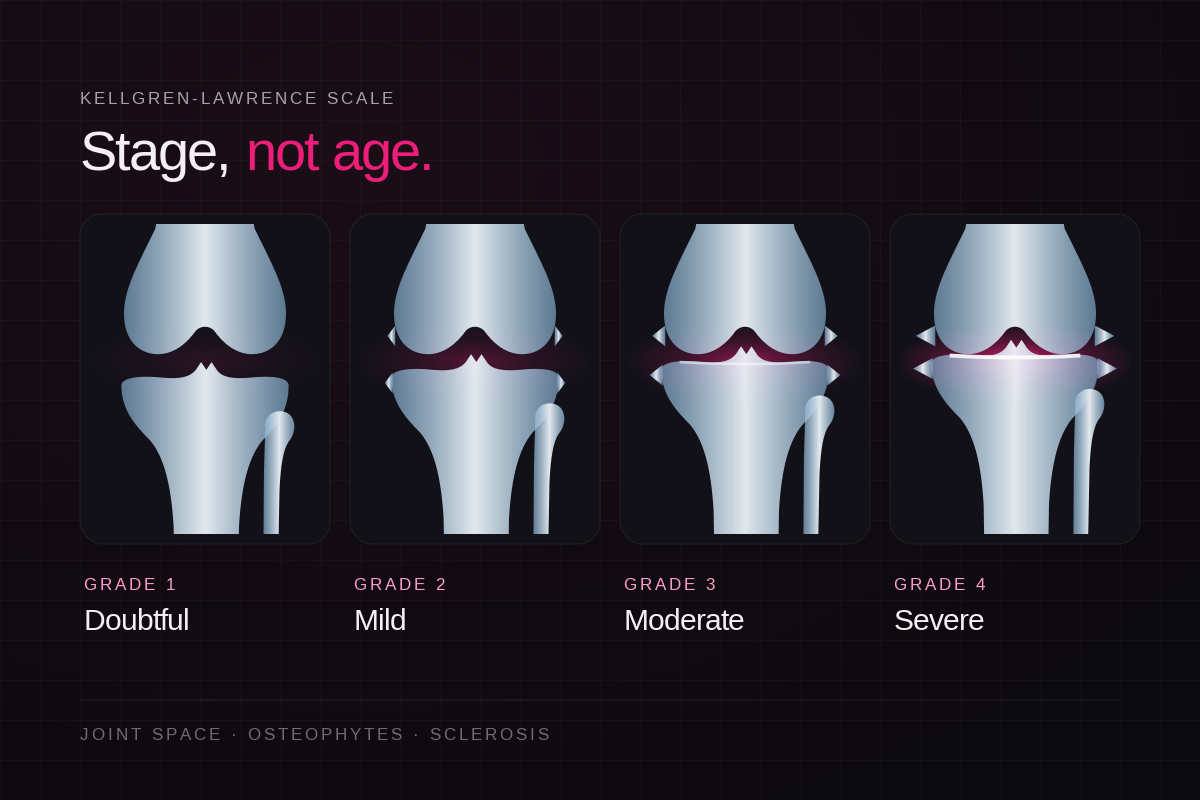
- Imaging. This usually starts with an X-ray, preferably taken standing up to see the real space between the bones. If a meniscus or ligament injury is suspected, an MRI may be ordered.
- Treatment plan. It may include exercise and physical therapy, weight control, medication, injections and, when the rest is no longer enough, surgery.
If you’re wondering whether you’re old enough for surgery, read At what age should you have knee surgery?. And if your doctor has already mentioned a replacement, this guide explains what to expect before, during and after.
Frequently asked questions
Is knee pain at night serious?
Not always, but it’s a sign worth checking. Pain that appears at rest or wakes you usually means the inflammation in the joint no longer depends on activity. It can have several causes, from a recent injury to advanced wear, and only a consultation with studies can tell them apart.
What test do I need to find out what’s wrong with my knee?
It usually starts with a physical exam and an X-ray, preferably taken standing up to see the real space between the bones. If a meniscus, ligament or cartilage injury is suspected, the surgeon may order an MRI.
If the injection no longer works, do I need surgery?
Not necessarily. It means the joint has changed and treatment needs to be adjusted. Depending on the stage of wear, physical therapy, weight control, medication or another type of injection can be combined. Surgery is considered when these options no longer control the pain or function.
Orthopedic surgeon or traumatologist: who should I see for knee pain?
In Mexico, traumatology and orthopedics are one specialty, so you can see an orthopedic and trauma surgeon. Dr. Mariana López also has fellowship training in hip and knee joint surgery.
Sources
- American Academy of Orthopaedic Surgeons (AAOS), OrthoInfo. Total Knee Replacement.
- MedlinePlus. Knee Injuries and Disorders.
- MedlinePlus. Osteoarthritis.
Dr. Mariana López Martínez
Dr. Mariana López Martínez is an orthopedic and trauma surgeon with fellowship training in hip and knee reconstruction from the Universidad de Monterrey at Swiss Hospital. She completed her residency at IMSS UMAE 21 in Monterrey and sees patients in Tijuana, in English and Spanish.
Medical license 11678865 · Specialty license 14090312
This article is for information only and doesn’t replace a medical consultation. If you have pain or questions about your case, book a consultation.