Knee replacement in Tijuana: what to expect before, during and after
Who is a candidate, how the surgery works step by step, how long recovery takes and how long a knee replacement lasts.

A knee replacement, or total knee replacement, replaces the damaged surfaces of the joint with medical-grade metal and plastic components. Its goal is to relieve pain and restore movement when the wear no longer responds to other treatments. If you’re in Tijuana or Southern California and considering it for yourself or a family member, this guide explains what happens before, during and after surgery.
A total knee replacement replaces the damaged joint surfaces with components made of high-strength metal alloys and a polyethylene insert. The length of the surgery depends on the complexity of each case; the goal is to perform it safely, precisely and systematically, using optimized protocols and a team specialized in joint replacement. Mobilization starts early, and many patients can walk within the first 24 hours. Functional recovery usually advances significantly during the first 4 to 8 weeks and continues to improve in the following months.
Who is a candidate for a knee replacement?
The American Academy of Orthopaedic Surgeons (AAOS) mentions these as the most common situations for considering a total knee replacement:
- Pain or stiffness that limits daily activities such as walking, climbing stairs or getting up from a chair.
- Moderate or severe pain at rest, day or night.
- Joint wear.
- Knee deformity, bowing outward or inward.
- No improvement with other treatments: medication, injections, physical therapy or other surgeries.
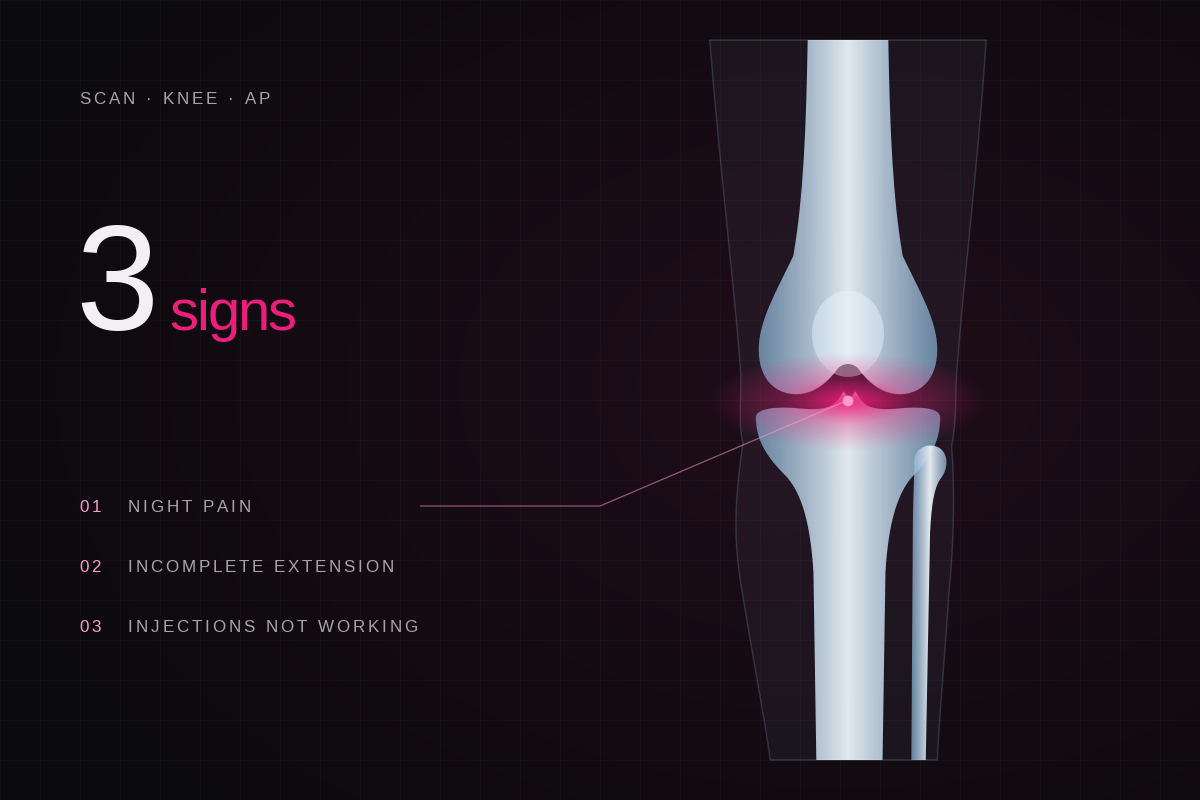
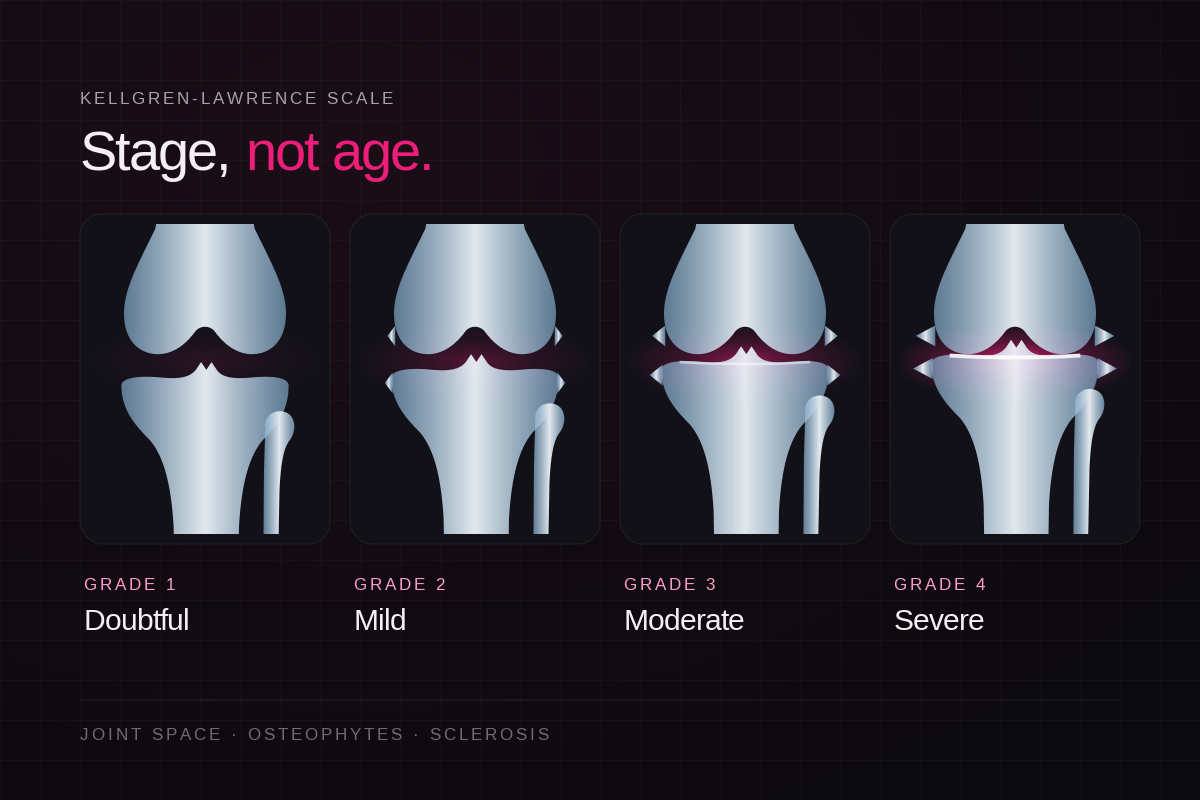
There is no age limit; we explain why in At what age should you have knee surgery?. If you still aren’t sure whether your pain needs a checkup, start with these 3 signs.
The parts of a total knee replacement
- Femoral component: a metal piece that covers the end of the femur and reproduces its curved shape.
- Tibial component: a metal platform fixed to the top of the tibia, usually with a small stem.
- Polyethylene insert: medical-grade plastic that sits between the two metal pieces and lets the knee glide.
- Patellar button: in some cases, the back of the kneecap is covered with a plastic piece.
When wear affects only one part of the knee, a partial replacement may be placed in selected cases. Which one is right is decided at the consultation.
Before surgery
- Pre-op evaluation: lab tests, an electrocardiogram, a dental evaluation and, depending on the case, a review with internal medicine or cardiology.
- Medication review: some, such as blood thinners and immunomodulators or biologics, are adjusted or stopped only on medical instructions.
- Managing health conditions: arriving with your diabetes and blood pressure under control reduces risks.
- Preparing your home: remove rugs, have a firm chair with armrests, a walker without wheels and a cane, keep everyday items within reach and have someone to help during the first few weeks.
If you’re coming from the United States, how many days to stay nearby for your first follow-ups is discussed at the consultation. The first visit can be done by video call to review your studies before you travel.
The day of surgery
The hospital stay is at least 1 day and ideally 3 days; after that, you go home. Regional anesthesia is usually used, generally a neuraxial block, sometimes combined with a peripheral nerve block.
The surgery is done in four steps:
- Preparing the bone: the cartilage and a thin layer of damaged bone are removed from the femur and tibia.
- Placing the metal components, which reproduce the surface of the joint.
- Covering the kneecap with a plastic button, when indicated.
- Placing the plastic insert between the metal pieces so the movement is smooth.
Afterward you go to recovery, where your pain is managed and your progress is monitored. Moving your knee early, with supervision, is part of the treatment.
Recovery: what to expect week by week
- HospitalPain management, measures to prevent blood clots, compression stockings, knee mobility exercises and first steps with a walker, always with supervision.
- Weeks 1-2Walking at home with a walker, daily exercises and wound care. Stitches are removed at a visit with Dr. Mariana. It’s normal to have pain with activity and at night.
- Weeks 3-6Most people return to their daily activities during this period, according to the AAOS. Coming off the walker is assessed. Your doctor clears your return to driving.
- Months 2-3More strength and endurance. Low-impact activities such as walking, stationary cycling and swimming once the wound has closed.
- Up to 1 yearSwelling gradually goes down and your knee can keep improving for months.
Every recovery is different. The part that depends most on you is sticking with physical therapy.
Considering a knee replacement?Book an in-person consultation at Central Toreo or a video consultation.
Book a consultationRisks and warning signs
Like any surgery, knee replacement has risks: infection, blood clots in the legs, stiffness and, over the years, wear or loosening of the components. Before surgery, your surgeon explains how they’re prevented in your case.
- Fever or chills.
- A wound that’s red, hot or draining fluid.
- Pain and swelling in your calf.
- Shortness of breath or chest pain: go to the emergency room.
How long does a knee replacement last?
According to the AAOS, more than 90% of today’s total knee replacements are still working well 15 years after surgery. Following instructions, going to your follow-ups and watching your weight help it last longer.
Knee replacement with Dr. Mariana López in Tijuana
Dr. Mariana López Martínez is an orthopedic and trauma surgeon with fellowship training in hip and knee reconstruction from the Universidad de Monterrey at Swiss Hospital. In addition to primary replacements, she performs revision and rescue of previous implants.
- In-person visits at Central Toreo, 7th floor, office 703 (Blvd. Agua Caliente 9555, Calete, Tijuana). See the route from the San Ysidro border.
- Video consultation to review your studies before you travel.
- Care in English and Spanish.
- She works with insurers such as GNP, AXA, Bupa, Allianz, BX+, BBVA Seguros and Seguros Banamex. Coverage depends on each policy.
Frequently asked questions
How long does knee replacement surgery take?
It depends on the complexity of each case and the patient’s condition. Rather than doing it quickly, the goal is to carry out each stage safely, systematically and precisely.
When will I be able to walk after a knee replacement?
Mobilization starts early, and many patients can walk with a walker, always with supervision, within the first 24 hours. Functional recovery usually advances significantly during the first 4 to 8 weeks and continues to improve in the following months.
Does insurance cover a knee replacement?
Many major medical policies in Mexico (gastos médicos mayores) cover knee replacement, but it depends on your policy, your deductible and any waiting periods. Dr. López works with insurers such as GNP, AXA, Bupa and Allianz, among others. If your insurance is from the U.S., ask about your case at the consultation.
Can I be treated in Tijuana if I live in the United States?
Yes. Dr. López sees patients in English and Spanish, and the first visit can be a video consultation to review your studies before you travel. Your stay in Tijuana and your follow-up after surgery are planned at the consultation.
Sources
- American Academy of Orthopaedic Surgeons (AAOS), OrthoInfo. Total Knee Replacement.
- MedlinePlus. Knee Replacement.
Dr. Mariana López Martínez
Dr. Mariana López Martínez is an orthopedic and trauma surgeon with fellowship training in hip and knee reconstruction from the Universidad de Monterrey at Swiss Hospital. She completed her residency at IMSS UMAE 21 in Monterrey and sees patients in Tijuana, in English and Spanish.
Medical license 11678865 · Specialty license 14090312
This article is for information only and doesn’t replace a medical consultation. If you have pain or questions about your case, book a consultation.